


(Texte français disponible ici)
We interrupt our regularly scheduled programming for a special report.
Quebec may be at the centre of a vast conspiracy to destabilize Canada, then break it apart so the United States can more easily absorb it.
It sounds like a spy thriller set in a parallel universe. Except the first chapter appeared Friday in Le Journal de Montréal, and it involves people you know and will soon have a chance to vote for.
Journalists wanted to know what Ms. Fréchette knew and when she knew it. Her answer changed over the course of the day, becoming deeply embarrassing for the premier.
The sequence matters. Grab a coffee; it’ll help you keep track. And no, Ms. Fréchette was not arrested by the police, even if her expression is perfect for a mugshot.
Here’s the bombshell that broke around noon Friday:
- Québecor’s investigative bureau reported that Ottawa had warned Quebec about possible American interference aimed at helping the Parti Québécois win;
- A senior Quebec government official met with federal government representatives “at a neutral location, where there were no cameras”;
- He was forbidden from bringing his cellphone;
- The Quebec official was shown writings from the American think tank Defense Analyses and Research Corporation, or DARC, proposing a strategy of disruption involving separatist movements in Quebec and Alberta.
You’re entitled to wonder, since you’re reading about this and everyone is talking about it, whether they really needed to play Deep Throat in a parking garage.
It was obviously going to come out sooner or later. These things always do.
And if you want to prevent a campaign of manipulation or destabilization against a population, the best approach is to tell people they may be its target.
It took me all of a minute, incidentally, to find three DARC articles about Canadian separatist movements on its website: here, here, and here.
The meeting between IXE-13 and Ottawa’s Deep Throat could have been an email.
The main article, “Our Canadian Problem,” develops an argument about Canada’s multicultural and egalitarian policies, which promote both ethnic and sexual diversity.
Its author, John Waterman, believes those policies encourage the infiltration of Canadian government institutions, including the federal police, intelligence services, and intelligence-sharing arrangements with allies (among them the Five Eyes network). He sees this as an eventual threat to the United States.
In short, DARC doesn’t like Canadians of Chinese, Indian, or Pakistani origin working in government agencies, which it considers “increasingly captured by sectarian interests more loyal to adversaries of the US.” It doesn’t much like human rights groups or their influence either, which it generally sees as contrary to American interests.
Because Canada is moving further from his vision of the American ideal, Waterman proposes a strategy to “dismember” the country. It would include disinformation operations, diplomatic pressure, and support for regional separatism.
To borrow an expression that resurfaced this week, “it’s completely, utterly nuts.”
Now, I could start a think tank and write all kinds of bullshit. That wouldn’t mean anyone in Ottawa, Washington, or Moscow would listen to me.
Evidently, someone in the federal government who gets paid to assess these things thinks they might.
Above my pay grade, as the Chinese say.
Still, I think the way our politicians handled this matters.
The Deep Throat-style meeting between the senior Quebec official and a federal counterpart took place in early September. So no more than three weeks ago.
The Quebec government received warnings on at least two other occasions:
- The most recent came in the past few days, through CSIS;
- It reportedly involved “deeply concerning and troubling information that we passed on to the appropriate authorities.”
(I’ll note in passing that what happened next gives us reason to question the word “appropriate” as a description of those authorities.)
- The Quebec government also “received similar warnings at the highest level in early 2026, during a meeting of provincial premiers in Ottawa.”
(If “at the highest level” and “meeting of premiers” appear in the same sentence, it’s fair to assume François Legault, who was premier at the time, or his office was informed. Anything below that would hardly be the “highest level.”)
That’s what we knew at noon.
Keep it in mind as we look at what Ms. Fréchette had to say around midday Friday.
“Serious information about possible risks of foreign interference in the Quebec election has just come to light.”
So this is news to Ms. Fréchette.
“I have to tell you that I’m very concerned about this situation, and I want us to get to the bottom of it.”
Source: Le Journal de Montréal
Her delivery is so painful that the camera operator changes the framing three times to liven it up.
I don’t know why, but this image comes to mind.

Christine Fréchette is clearly surprised. But surprised by what? We’ll find out soon enough. She also calls for a meeting with federal officials.
Here’s what Ms. Fréchette had to say later that day:
I’ve transcribed the main points and added the questions from the 106.9 FM Mauricie reporter. You can see her phone and hear her if you turn up the volume and listen closely.
Ms. Fréchette: “Actually, the surprise is seeing this online. I found out about it in the past few days. But at the same time, I’m telling you, we have no reason to believe these threats have materialized.”
Okay. So the premier is mainly “surprised” that the story came out. The rest wasn’t news to her.
Why? Because she had known since last Saturday.
Reporter: “Why didn’t you tell us that at noon?”
Ms. Fréchette: “[Insert a helping of word salad here] (…) I didn’t say everything at noon (…) I wanted to hold a press conference… I didn’t say 100% of what I wanted to say.”
Reporter: “The article came out, but you’d known since Saturday?”
Ms. Fréchette: “Yes. But it’s still concerning.”
Reporter: “I don’t understand why, from [last] Saturday until noon today, you were concerned, but now, six hours later, you don’t really seem to be anymore… What happened between noon and now?”
Ms. Fréchette: “Look, we have no reason to believe it has materialized, but it’s still concerning, because attempts do happen… Whether those groups actually went ahead with anything isn’t for me to say.”
Reporter: “What changed in the past six hours to make you suddenly feel more reassured?”
Ms. Fréchette: “Well… I was, uh… I listened to the teams at the Ministry of Internal Security.”
(Translation: I spoke to my communications team.)
That’s where the torture session ends in the video posted above.
Before going on, I want to give special mention to the 106.9 FM reporter. Her bullshit detector was switched on, and she wouldn’t let go.
Ms. Fréchette’s surprising statements didn’t end there.
Pressed further, the incumbent premier said she learned from the Québecor article that “there had been discussions […] with the previous government.”
Which government, exactly?
“Mr. Legault… Mr. Legault’s government.”
You mean the government whose cabinet you were a member of?
“But I hadn’t been informed about that” (…) “Mr. Lafrenière had been told, but he didn’t inform me.”
And that’s how you throw your internal security minister under the bus.

Late Friday evening, firefighter PR man Minister Lafrenière confirmed that he had known since January.
Mr. Lafrenière reportedly heard about “rumours” of American interference from Premier Legault’s office. The government then reportedly passed the information to Ottawa.
Without getting paranoid, three observations.
First, Minister Lafrenière doesn’t say who told him about these “rumours.” Second, Ian Lafrenière is deputy premier. It never occurred to him to discuss them with his boss? Third, his account contradicts Québecor’s, which says the federal government alerted the provinces at a meeting of premiers.
As far as I know, Quebec doesn’t have its own intelligence service.
Unless you count this one:
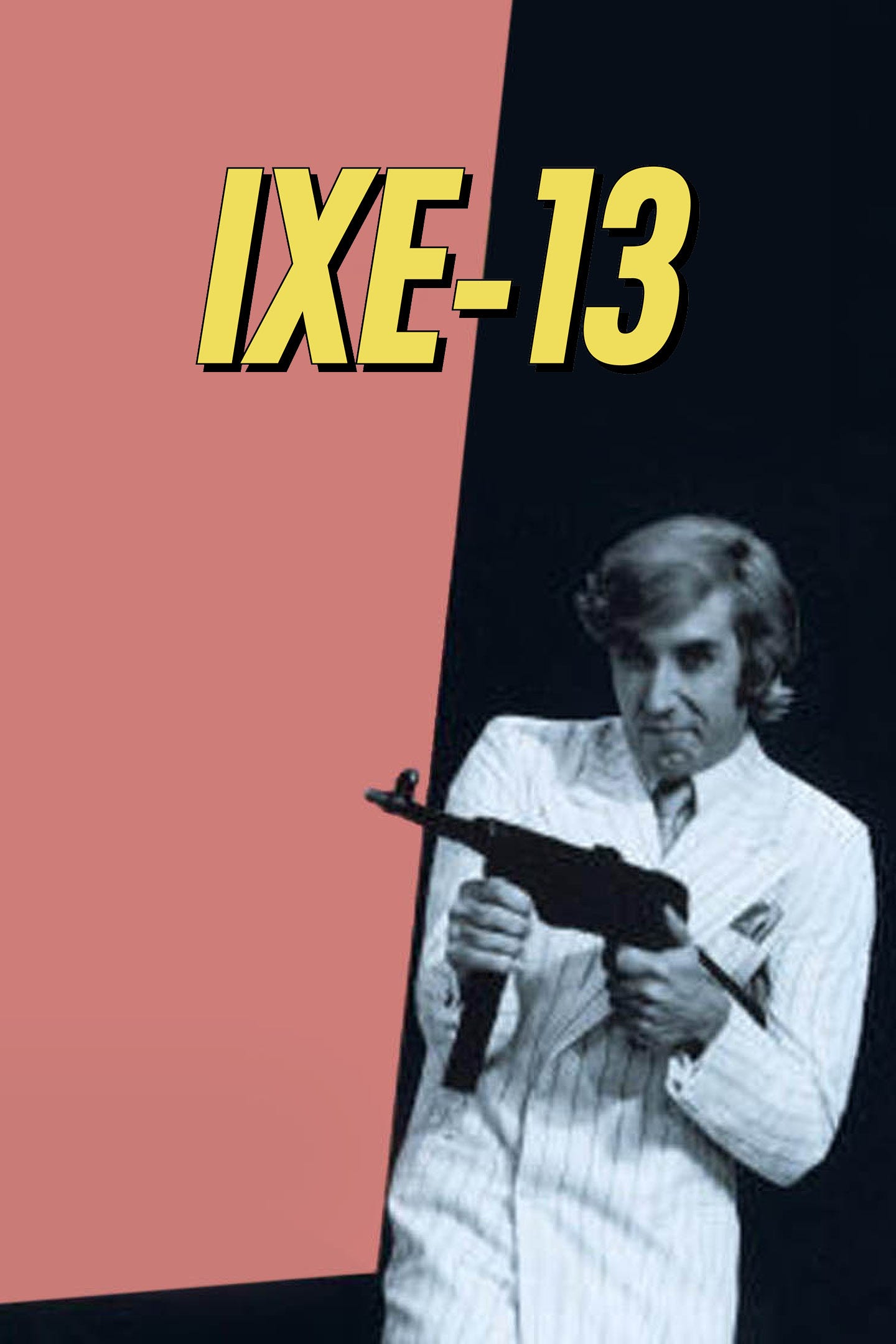
Source: Office national du film
(You can watch Quebec’s answer to James Bond for free here. Think Austin Powers rather than Sean Connery.)
The funniest part: while the two levels of government were meeting in secret locations and passing around screenshots as though they were state secrets, Jean-François Lisée was writing about the subject and citing one of the DARC articles on his blog and in Le Devoir. Back in March.
+++++++
Two questions emerged from the television and online commentary I saw Friday evening as I was writing this.
The first is whether the American government can actually influence the outcome of the Quebec election.
We talk about Donald Trump and tariffs every day, so they plainly have an effect. But not the one DARC suggests and hopes for: support for sovereignty and the Parti Québécois has been stable for months.
It’s also hard to imagine the American government dropping leaflets from planes a week before the vote, or doing anything else that could change the result. In a free country, instant access to a wide range of information sources limits the effectiveness of propaganda. If an operation were underway, we’d see it.
Could Donald Trump tell us on Truth Social to support the Parti Québécois? Anything’s possible, especially if Fox News decides to talk about Quebec while Trump can’t sleep. Would that change your vote?
Disrupting the outcome of a future referendum is another matter, especially when the time available to act could stretch over months, potentially years. For example, we also learned Friday that the Quebec government had been approached directly by the U.S. embassy about negotiating a separate tariff deal for Quebec. That is definitely a divide-and-conquer approach.
The goal was not necessarily to “dismember” Canada, since Quebec’s current government is federalist. But it could have planted the first seeds of discord. The Fréchette government didn’t bite.
The second question is what the premier knew and why she didn’t tell us.
The answer could be more troubling for Ms. Fréchette.
When she was asked at noon, there was a perfectly simple answer available: I’ve known since Saturday, we’re monitoring the situation, we’ve been in contact with Ottawa, we see nothing at present that could affect the election result, and if that changes, voters will be informed immediately.
Instead, Ms. Fréchette did what she so often does. She switched to her prerecorded talking points.
The premier said things she either didn’t know to be true or knew were untrue. She focused more on what she wanted people to take away than on what they had a right to know.
And hundreds of thousands of Quebecers watched her try to pull the wool over their eyes.
-30-
My name is Patrick Déry. I’m a French-speaking Québécois writing for a living, and trying something different here. If you enjoyed reading this text, you can support me by buying me a coffee. You can also subscribe to this media (free or paid, your choice).
Comments, shares, and “likes” are always appreciated. It also helps the Substack algorithm notice me, so don’t be shy!