


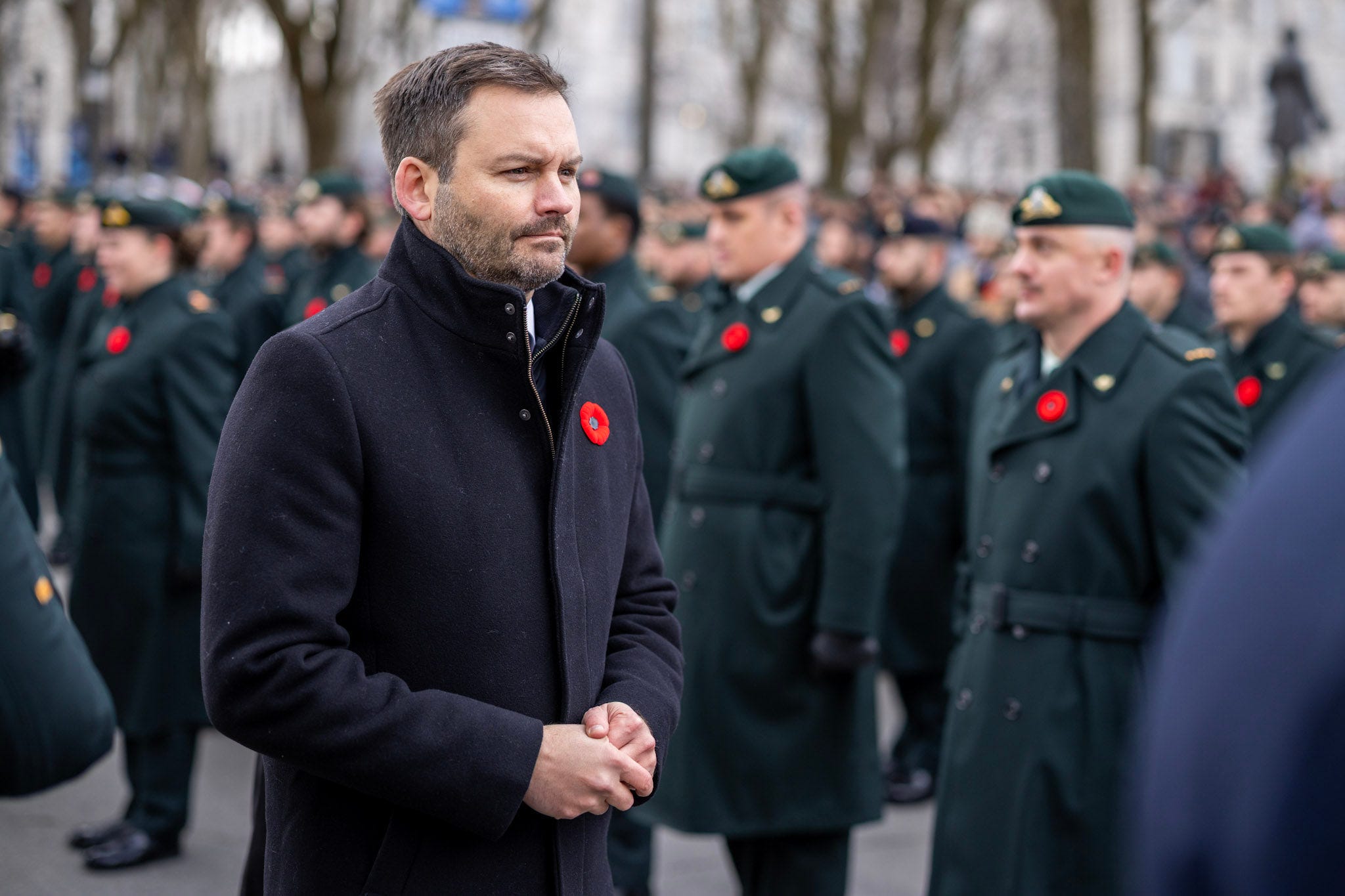
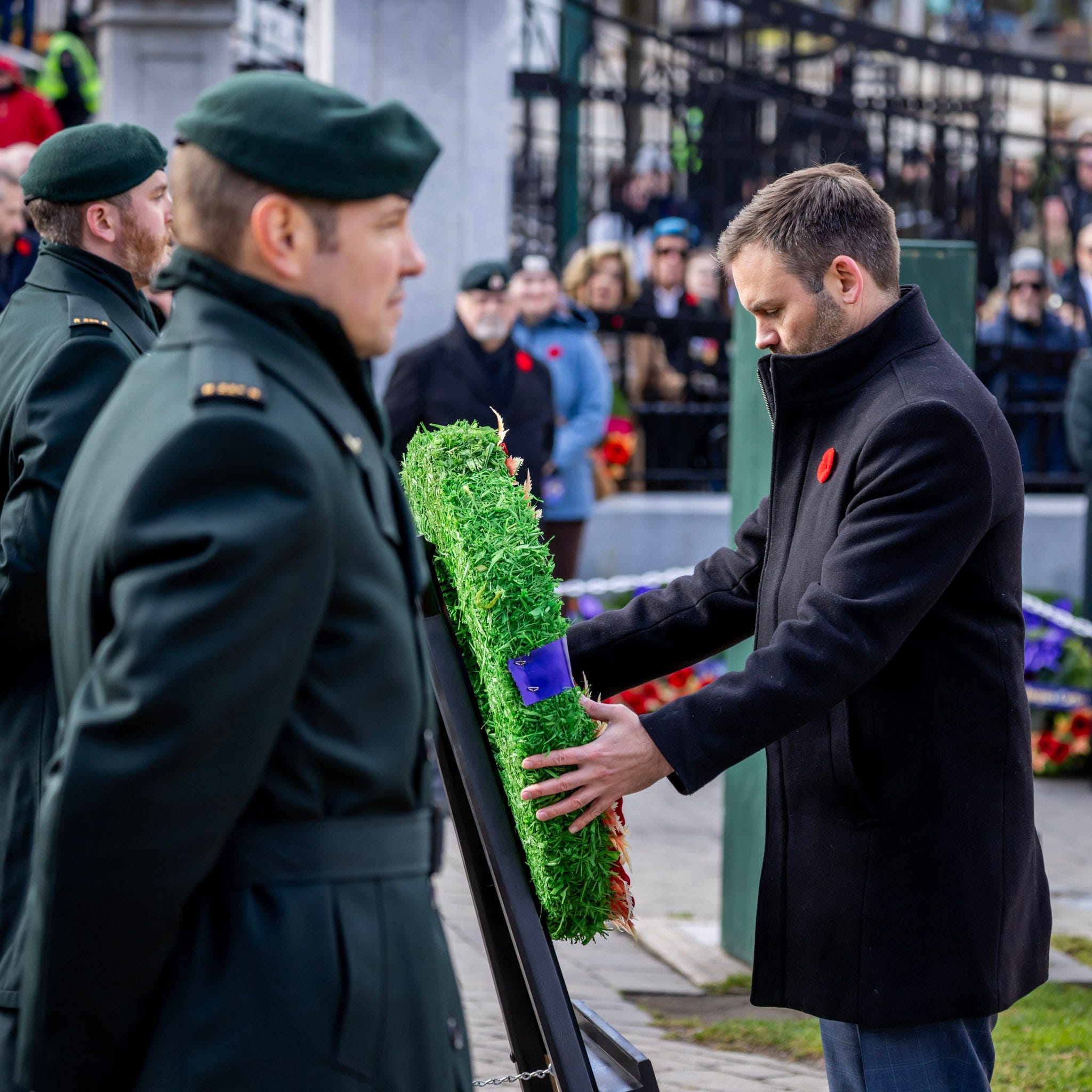
Photo from Paul St-Pierre Plamondon’s X account
(Texte français disponible ici)
How far will you go to sell a people on a country of their own when they’ve made it clear for 20 years that they don’t want one?
Apparently, far enough to rewrite history and use the sacrifice of soldiers who died at the front to make your case.
Wednesday was Remembrance Day.
In France, Belgium, and the Commonwealth countries, the day originally marked the armistice, which took effect at 11 a.m. on November 11, 1918. It was also a day to honour those who had paid the ultimate price for their country.
The Great War was supposed to be the war to end all wars. A generation sacrificed. Nearly ten million soldiers cut down, and about as many civilians. Technology and industrialization had made horror possible on a scale no one had ever seen and everyone hoped never to see again.
Barely twenty years later, it started all over again. The second war claimed three times as many lives. Then came Korea, peacekeeping missions, and Afghanistan. History is too often written in blood. And so, every November 11, we now remember all the men and women who fought, though the two world wars still loom large.
On Wednesday, politicians paid tribute to those who have fought and those who serve today.
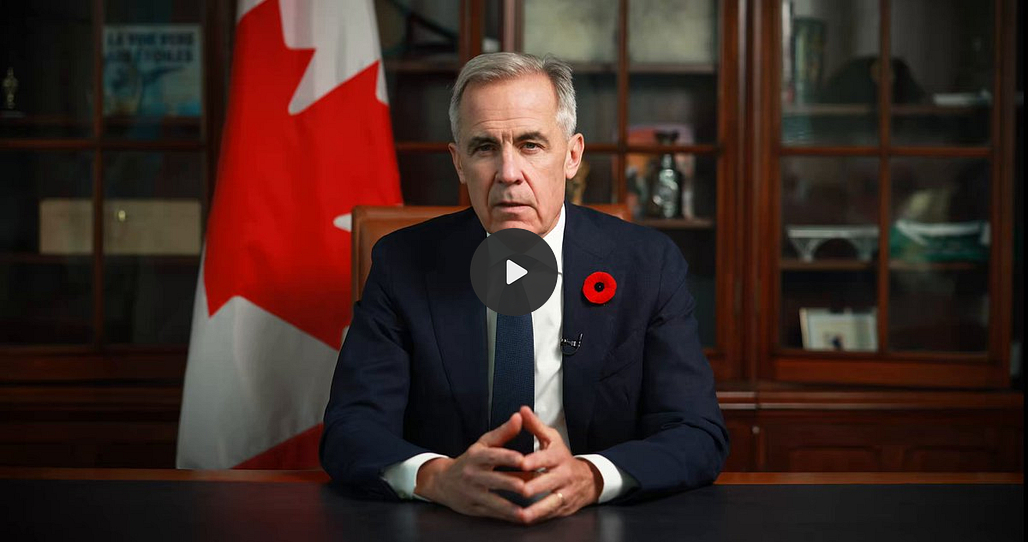
Here’s what Canada’s prime minister posted.



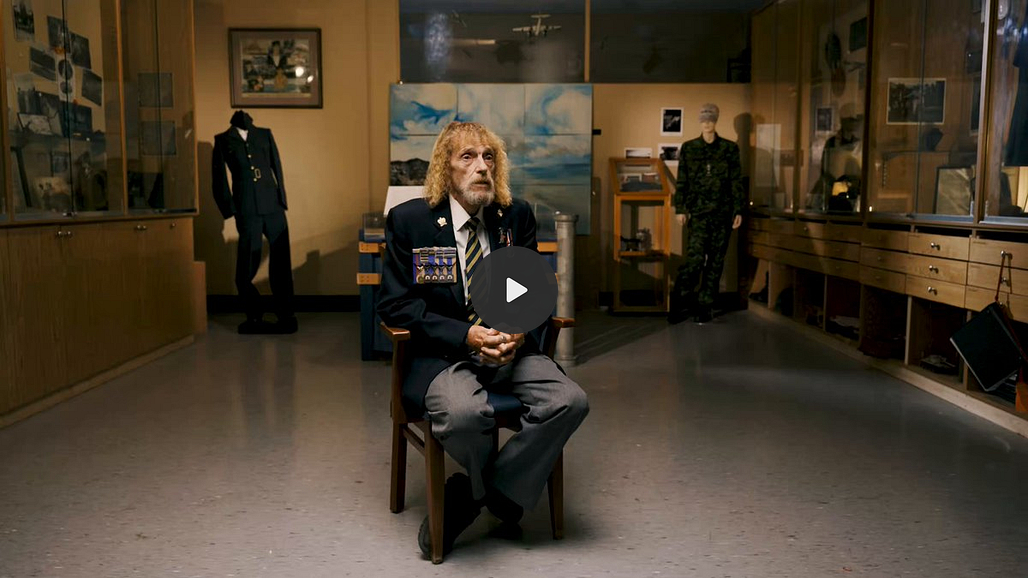
And here’s what Ontario’s premier posted.



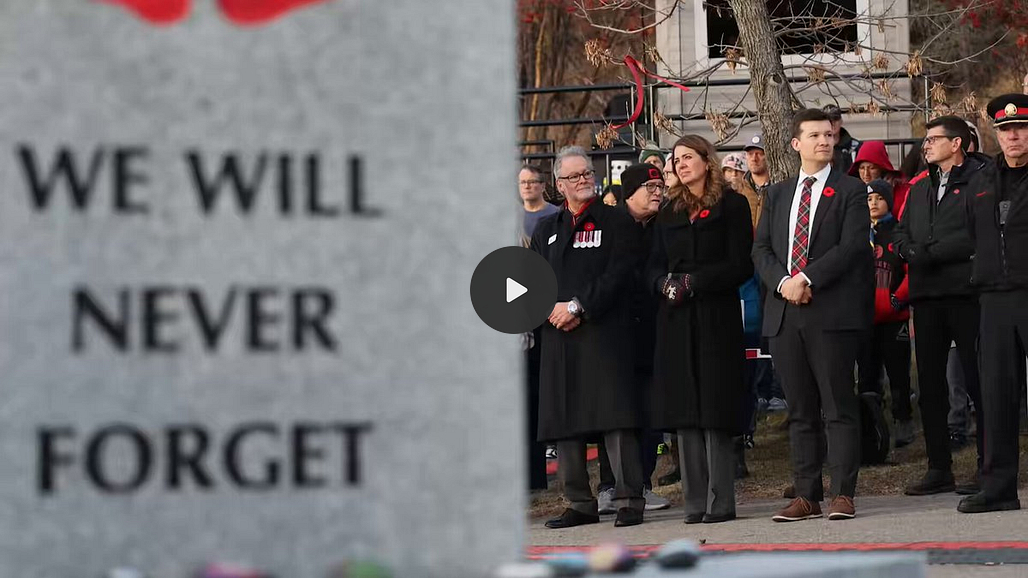
And Alberta’s premier.



And here’s the post from Quebec’s premier.


Here it is in full, translated from the French.
“Today, I remember. I remember those who made the ultimate sacrifice to defend Quebec and our values of peace, freedom, and democracy.
Our heroes have distinguished themselves in every conflict involving Quebecers since the beginning of the 20th century. Some are better known than others, including Léo Major, the soldiers of the Royal 22e Régiment, and those of the Régiment de la Chaudière. Others fell in battle in relative obscurity. All their efforts and sacrifices counted equally in our shared fight for democracy and freedom.
Finally, I’m also thinking of the thousands of men and women who devoted their lives to public service in uniform. To all veterans, I say thank you on behalf of the Quebec nation.
So let’s take the day to remember those who gave their lives or devoted them to defending us, those who came home with physical or psychological scars, those now serving in conflict zones, and each and every one of their families.”
See the difference?
The first three kept it to a few sober lines. Mark Carney doesn’t even use the word “Canada” in the text of his two posts. There’s no glory in war. It’s a grim duty for those unlucky enough to have it thrust upon them, and we owe them a debt.
Paul St-Pierre Plamondon, for his part, chose to use November 11 to rewrite history and commemorate the exploits of “our heroes.”
When PSPP says soldiers went off to “defend Quebec,” he’s making up a nationalist story that bears no resemblance to reality.
In all its history as part of the Canadian federation, Quebec has never been attacked and, apart from the Battle of the St. Lawrence, has never had to be defended.
Quebecers who fought in Europe during the two world wars didn’t go there to “defend Quebec.” They fought to liberate France and other countries invaded by Imperial Germany in the First World War and by Nazi Germany in the Second. You could also say they defended a certain idea of freedom. Defending Quebec had nothing to do with it.
Like their civilian compatriots, French-speaking soldiers at the time thought of themselves as Canadians or, more precisely, French Canadians. Language defined us far more than the province did back then.
In 1945, a Québécois was someone from Quebec City. It would be another two decades, with the rise of modern Quebec nationalism, before the term came into common use for people across the province.
Most French Canadians who fought had made a deliberate choice to enlist in the Canadian Army, the very army of the “colonial regime” PSPP so despises.
(A word on conscription. More than a million Canadians wore the uniform between 1939 and 1945. Most Canadian conscripts, English- and French-speaking alike, served at home. About 13,000 were sent overseas. Only a fraction of them, about 2,500, joined units at the front, starting in early 1945. Sixty-nine were killed in action.)
Some French Canadian soldiers were already serving in the regular army when the war began. Others volunteered. Some went out of idealism or to defend France, which they regarded as the mother country. Others went looking for adventure, better pay, or a bit of both.
That was the case with Léo Major, whom Paul St-Pierre Plamondon mentions in his post.
Private Major was a remarkable man of action. He volunteers in 1940 and lands in Normandy in 1944. After losing an eye in action, he stays in Europe against the advice of his doctor, who wants to send him home. In the Battle of the Scheldt, in the Netherlands, he single-handedly captures 93 German soldiers.
In February 1945, the vehicle he’s riding in is blown up by a mine. Major suffers three fractures in his back, two sprained ankles, and four broken ribs. A terrible patient, he slips out of the hospital after a week.
Two months later, as the story goes, he liberates the Dutch city of Zwolle single-handedly after his friend is killed. Furious, he goes through the city firing his submachine gun and throwing grenades to make the Germans think a much larger force is attacking. Time and again, he takes small groups of German soldiers prisoner. He also stumbles on SS headquarters, kills four officers, and drives off the rest. By the time the regiment enters Zwolle in the morning, the city is already free.
Major later enlists to fight in the Korean War, where he distinguishes himself again.
But until quite recently, we knew nothing about any of this because Léo Major didn’t talk about it. Even his wife didn’t find out until 1970, 25 years after the end of the Second World War.
That’s a pretty good indication that Major, who died in 2008, would probably have been uncomfortable with being given more prominence than his fallen comrades or seeing his exploits used for political ends.
In fact, the historian who wrote Major’s biography believes he was probably a federalist, based on what his daughter told him. We don’t know that for sure either. Like many people in uniform, Major kept his political opinions to himself.
Even today, if you decide to make a career in the Canadian Armed Forces, chances are you’re less of a sovereigntist than the average PQ activist.
There was a world of difference between pressing nationalist demands and what drove the war effort in Europe. The United States, the United Kingdom, and Canada each had their own armies and generals, but they eventually came together under a single command. Soldiers from occupied countries such as Poland and France who were still free to fight joined them.
The British, Americans, and Canadians who went to war fought less for their own countries than for the countries that needed liberating. They were simply the “Allies,” then the “United Nations,” which led directly to the founding of the organization of the same name at the end of the war.
They fought against extreme forms of nationalism in the name of universal values.
Remembrance Day is a day to remember the dead and the price of keeping the peace. Military exploits are for another day.
The premier of Quebec didn’t need to use November 11 to further his own nationalist ambitions. He could have taken a break and waited until the next day.
That would have done no disservice to Quebec soldiers, past or present.
And it would have shown a little more respect for their memory and for everyone else who fought alongside them.
A few words were all he needed to take out. Or leave out in the first place. Then the premier’s tribute would have spoken to everyone.
“Today, I remember. I remember those who made the ultimate sacrifice to defend our values of peace, freedom, and democracy.
Their sacrifices mattered in our shared fight for democracy and freedom.
I’m also thinking of the thousands of men and women who devoted their lives to public service in uniform. To all veterans, I say thank you.
So let’s take the day to remember those who gave their lives or devoted them to defending us, those who came home with physical or psychological scars, those now serving in conflict zones, and each and every one of their families.”
-30-
My name is Patrick Déry. I’m a French-speaking Québécois who writes for a living, and I’m trying something different here. If you enjoyed reading this article, you can support me by buying me a coffee. You can also subscribe to this publication (free or paid, your choice).
Comments, shares, and “likes” are always appreciated. They also help the Substack algorithm notice me, so don’t be shy!
Thank you for a sobering article. Having never served in the military, I believe during battle one didn’t care whether his partner was from Ontario, Alberta or Quebec. Premier St-Pierre Plamondon’s statements are a great disservice to Canadian veterans and particularly those who sacrificed for this country.
He might read “Dieppe: The Shame and the Glory” by Terence Robertson.
Robertson cites that the Nazis treated French and English Canadian prisoners differently by giving rations to French soldiers only. To paraphrase one French Canadian soldier stating to the Nazis, while his fellow soldiers shared their rations with their English Canadian counterparts “ We are one nation and that is why we fought so well today.”
Thank you for providing these clarifications.